For years, SEO had a fairly simple scoreboard.
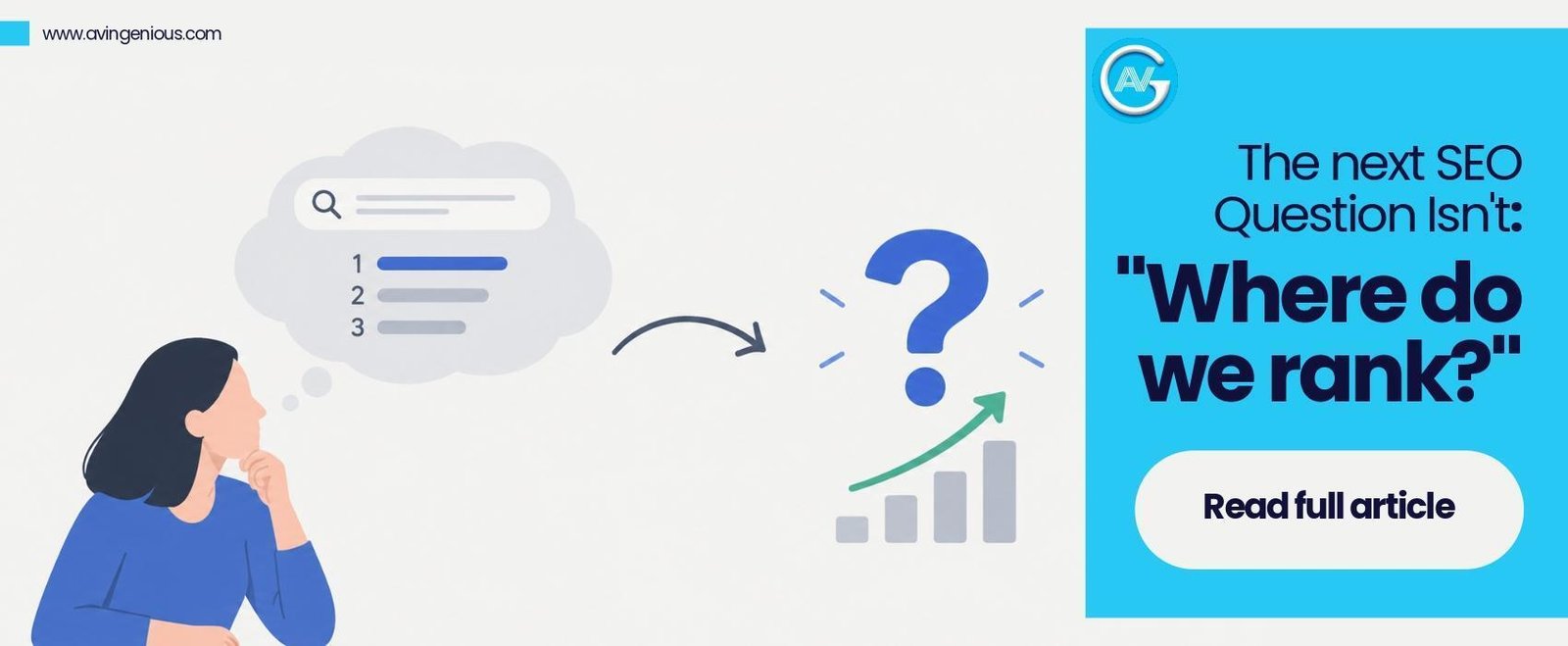
Where do we rank? Page 1 was good. Position 3 was better. Position 1 was the goal.
But search is changing. Now, users are not always searching with short keywords anymore. They are asking longer, more specific questions, using conversational queries, images, and other inputs. Google has also expanded AI Overviews and AI Mode, making Search more conversational and increasingly able to answer complex questions.
So the old question is starting to feel incomplete. Maybe SEO is not only about where you rank anymore. Maybe we need to ask: Where can people find you?
Because now search is not happening in just one place anymore.
Let’s think about how someone could research a business today. They could:
- Search on Google.
- Ask an AI tool.
- Look at YouTube.
- Read reviews.
- Check Reddit or forums.
- Look at a company’s social media.
- Ask a very specific question and see what comes up.
And sometimes, they may never type the name of your industry or service at all. They can simply describe the problem they have.
Because your potential customer does not care whether your business ranks for “best digital marketing company.” All they care about is finding an answer to their problem.
Ranking for the right keyword is still important
We are not saying that traditional SEO does not work now. Of course, it does! Google still sends billions of clicks to websites, and Google says AI-powered Search is also generating clicks to the web.
The difference is that search itself is becoming broader. A business can no longer think about visibility only as:
Keyword → Ranking → Click
The journey can now look more like:
Question → AI answer → Search result → Review → Social profile → Website → Decision
Or it can take a completely different path.
Driving traffic is only half the equation. Learn how strategic digital marketing works best when paired with conversion-focused user experiences. .
Users can find your brand before your website
This is where things get interesting. Imagine someone asks:
“What is a good digital marketing company for a growing startup?”
Now, they will not immediately start comparing websites. They might first look at an AI-generated answer, reviews, recommendations, discussions, or other content.
That means your website is still important. But it may not be the first place someone sees your brand.
This changes what good SEO should look like
Instead of asking only: “What keywords should we rank for?” businesses should also ask:
- “What questions are our customers asking?”
- “What information about our business is available online?”
- “Are we creating useful, original content?”
- “Are people finding credible information about us?”
- “Does our website actually answer the questions people have?”
And perhaps most importantly: “If a visitor does not search our brand name, can they still find us?”
That is a much bigger question. Clicks and being visible are not same. This is another shift worth paying attention to.
That means a visitor can find your brand without immediately clicking your website. Now, how does this happen? They might
- See your business mentioned in an AI response.
- Read your review.
- Watch your video.
- Might see your LinkedIn post.
- Might come across your answer while researching a problem.
So, basically, this interaction can happen somewhere other than your website. And this
interaction is not meaningless. It means the customer journey is becoming less linear.
Google itself says people are increasingly looking for forums, videos, podcasts, original perspectives, and firsthand experiences, and that these types of content can benefit from changing search behaviour.
The question is changing
SEO isn’t disappearing. The scoreboard is simply getting bigger.
“Where do we rank?” is still worth asking. But it shouldn’t be the only question.
The better question might be: “When our potential customer starts looking for an answer, are we somewhere they can discover?”
Because the future of search visibility no longer belongs only to the brands sitting at position #1. Now, it can also belong to the brands that are useful enough to be found, trusted enough to be considered, and present enough to be remembered. And that’s a very different SEO game.
Curious how AI can actually help your business grow? Exploring the right digital strategy can make all the difference.